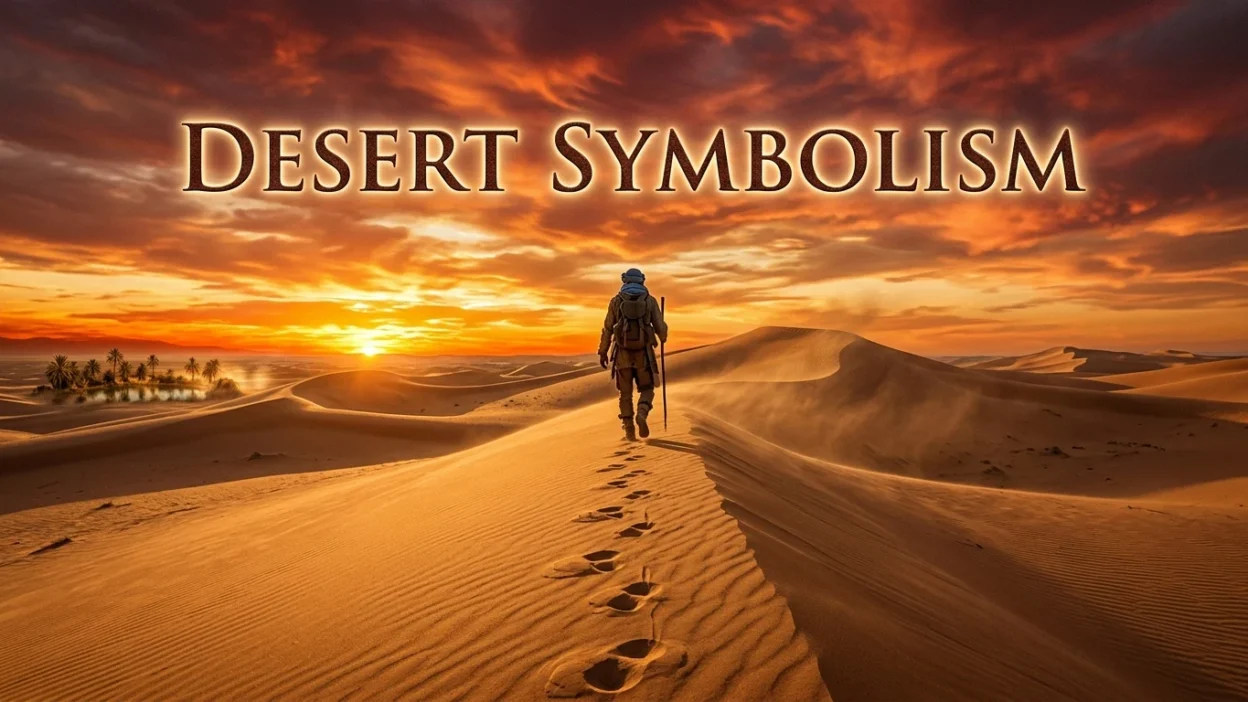
Desert symbolism has fascinated people for centuries because deserts represent far more than empty landscapes. In spiritual traditions, literature, dreams, and modern culture, the desert often symbolizes solitude, transformation, endurance, and inner discovery.
While deserts may appear harsh and lifeless, they also reveal hidden beauty, resilience, and the journey toward personal growth.
From ancient religious stories to modern films and poetry, desert symbolism continues to inspire people searching for meaning, clarity, and strength during difficult seasons of life.
Desert Symbolism Meaning (Clear Definition)
Desert symbolism refers to the deeper symbolic meanings connected with deserts and barren landscapes. A desert commonly represents:
- Isolation and loneliness
- Spiritual testing
- Survival and endurance
- Self-discovery
- Transformation and rebirth
- Simplicity and clarity
- Emotional emptiness or reflection
In symbolic language, the desert is often seen as a place where distractions disappear, forcing individuals to confront truth, fear, and personal growth.
Quick Symbolism Table
| Desert Symbol | Meaning |
| Endless sand | Uncertainty and life’s journey |
| Heat and dryness | Emotional struggle or hardship |
| Oasis | Hope, healing, and renewal |
| Silence | Inner reflection and wisdom |
| Survival | Strength and resilience |
| Empty landscape | Spiritual awakening or solitude |
What Does Desert Symbolism Represent?
Desert symbolism represents both hardship and transformation. Although deserts are associated with danger and emptiness, they also symbolize purification and renewal. Many people view the desert as a powerful metaphor for difficult periods in life where growth happens through struggle.
Common Symbolic Representations
1. Isolation and Solitude
The desert often reflects emotional or physical separation from society. It symbolizes moments when people feel alone, disconnected, or spiritually distant.
2. Inner Strength
Surviving the desert requires endurance. Symbolically, this connects to resilience, patience, and determination during life challenges.
3. Spiritual Journey
Many traditions describe deserts as sacred places where individuals discover deeper truths about themselves and the universe.
4. Transformation
The harsh environment of the desert strips away distractions and comforts, symbolizing personal change and rebirth.
5. Freedom and Simplicity
The open desert landscape also represents freedom from material distractions and the search for clarity.
Secondary symbolic themes connected to desert symbolism include spiritual awakening, emotional emptiness, resilience, purification, sacred journeys, and personal transformation.
Spiritual Meaning of Desert Symbolism
Spiritually, desert symbolism is deeply connected to awakening, reflection, and purification. The desert is often viewed as a sacred space where people face their fears, release emotional burdens, and reconnect with their true selves.
Many spiritual teachings suggest that growth happens during periods of discomfort. Just as travelers must survive harsh desert conditions, individuals often gain wisdom through life’s difficult experiences.
Spiritual Lessons of the Desert
- Silence encourages inner wisdom
- Hardship builds spiritual strength
- Simplicity removes distractions
- Solitude creates self-awareness
- Survival inspires gratitude and faith
In meditation and spiritual symbolism, crossing a desert may represent moving through confusion toward enlightenment or peace.
Biblical / Religious Meaning of Desert Symbolism
In many religious traditions, the desert holds sacred meaning. In the Bible, deserts are frequently places of testing, preparation, and divine encounter.
Biblical Meaning of the Desert
The desert often symbolizes:
- Faith during hardship
- Spiritual cleansing
- Dependence on God
- Testing and temptation
- Preparation for transformation
Important biblical figures spent time in the wilderness before major spiritual events. The desert became a place where faith was strengthened and purpose became clear.
Desert Symbolism in Other Religions
Islam
Deserts symbolize reflection, endurance, humility, and closeness to God. The desert environment played an important role in early Islamic history and spiritual culture.
Buddhism
Although not always focused on literal deserts, barren landscapes in Buddhist symbolism may represent detachment from worldly desires and the search for enlightenment.
Indigenous Traditions
Some Indigenous cultures view deserts as sacred spaces connected to ancestors, survival wisdom, and harmony with nature.
Desert Symbolism in History and Culture
Throughout history, deserts shaped civilizations, trade routes, and spiritual traditions. As a result, desert symbolism became connected with mystery, survival, and exploration.
Ancient travelers often viewed deserts as dangerous yet sacred territories where only the strong survived. Over time, deserts became symbols of courage and human endurance.
Cultural Meanings Across Different Societies
| Culture | Symbolic Meaning |
| Ancient Egypt | Death, rebirth, and the afterlife |
| Middle Eastern cultures | Survival, wisdom, and faith |
| Native traditions | Sacred connection with nature |
| Western symbolism | Loneliness and self-discovery |
| Modern culture | Adventure and personal transformation |
In many cultures, the desert represents both fear and freedom at the same time.
Desert Symbolism in Literature and Art
Writers and artists often use deserts to symbolize emotional struggles, spiritual searching, or personal transformation.
In literature, the desert frequently appears as a setting where characters confront themselves without distractions. The emptiness of the landscape mirrors emotional emptiness, uncertainty, or the search for meaning.
Common Literary Meanings
- Loneliness and despair
- Emotional healing
- Self-discovery
- Spiritual awakening
- Survival against adversity
Artists also use desert imagery to express silence, beauty, mystery, and timelessness. Endless dunes and dry landscapes create strong emotional and symbolic impact.
Dream Meaning of Desert Symbolism
Dreaming about a desert often reflects emotional or spiritual conditions in waking life. Desert dreams may symbolize loneliness, confusion, exhaustion, or personal growth depending on the dream’s details.
Common Desert Dream Interpretations
Walking Through a Desert
This may symbolize feeling lost, emotionally drained, or searching for direction in life.
Finding an Oasis
An oasis often represents hope, healing, opportunity, or emotional renewal.
Being Alone in the Desert
This dream can reflect isolation, independence, or a need for self-reflection.
Surviving a Desert Storm
A desert storm may symbolize emotional chaos, stress, or major life challenges.
Crossing the Desert Successfully
This commonly represents resilience, spiritual growth, and overcoming difficulties.
Dream symbolism varies based on emotions, surroundings, and personal experiences connected to the dream.
Modern Meaning of Desert Symbolism
In modern life, desert symbolism continues to represent emotional journeys, minimalism, healing, and transformation. Many people connect deserts with personal growth because deserts strip life down to essentials.
Today, desert imagery appears in:
- Films and television
- Motivational themes
- Spiritual retreats
- Fashion and photography
- Personal development symbolism
Modern interpretations often focus on resilience, freedom, and rediscovering purpose after difficult experiences.
The desert has also become associated with mindfulness and simplicity in a world filled with noise and distraction.
Signs and Messages Associated With Desert Symbolism
People who feel drawn to desert symbolism may be experiencing:
- A need for clarity
- Emotional exhaustion
- Spiritual searching
- Personal transformation
- A desire for simplicity
- Healing after hardship
The symbolic desert reminds people that growth often happens during uncomfortable or uncertain moments.
FAQs
What is the main meaning of desert symbolism?
Desert symbolism mainly represents isolation, transformation, spiritual testing, and personal growth through hardship and reflection.
Is the desert a positive or negative symbol?
The desert can symbolize both struggle and renewal. It often represents difficult experiences that eventually lead to wisdom and transformation.
What does a desert symbolize spiritually?
Spiritually, the desert symbolizes awakening, purification, solitude, faith, and deeper self-understanding.
What does dreaming about a desert mean?
Desert dreams usually reflect emotional emptiness, searching for direction, personal challenges, or spiritual growth depending on the dream context.
Why are deserts important in religious symbolism?
Deserts appear in many religious traditions as sacred places of testing, revelation, and spiritual preparation.
Conclusion
Desert symbolism reveals the powerful connection between hardship and transformation. Although deserts may appear empty and unforgiving, they often symbolize resilience, spiritual awakening, and the journey toward inner truth.
Across history, religion, dreams, and modern culture, the desert continues to remind people that clarity and growth can emerge from even the most difficult landscapes.

Cole Jaxson is the administrator of SymbolPeak, overseeing site management and content integrity. He is dedicated to presenting Bible-based spiritual symbol meanings with accuracy, reverence, and clarity, ensuring the platform remains trustworthy, well-organized, and aligned with biblical teachings and faith-centered understanding for readers worldwide.