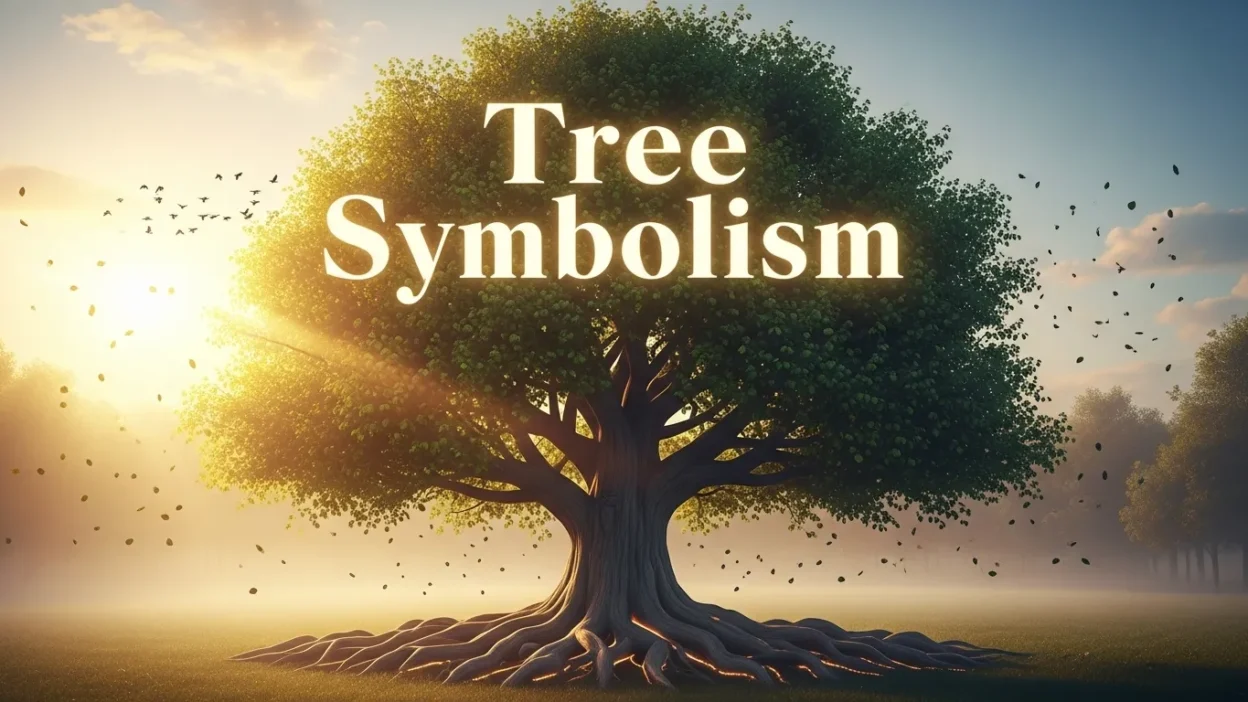
Trees are more than beautiful parts of nature. Across different cultures, religions, and traditions, they have symbolized life, strength, wisdom, renewal, protection, and spiritual growth. From the mighty oak to the delicate cherry blossom, each tree carries its own symbolic meaning shaped by its appearance, natural qualities, and cultural history.
Understanding tree symbolism can help us explore what trees represent in spirituality, mythology, literature, dreams, and everyday life. Some trees are associated with resilience and longevity, while others represent peace, prosperity, emotional healing, or the temporary beauty of life.
In this guide, you will discover the spiritual meaning of trees, the symbolism of 20 popular tree species, the meaning of the Tree of Life, and how different cultures interpret trees. Although these meanings vary between traditions, they offer a fascinating way to understand the lasting connection between humans and the natural world.
Quick Answer: What Does Tree Symbolism Mean?
Tree symbolism refers to the meanings people associate with trees based on their natural characteristics, cultural traditions, religious beliefs, and personal experiences. Trees commonly symbolize life, growth, strength, wisdom, stability, renewal, and the connection between earth and sky.
Different trees may represent different qualities. Oak trees often symbolize strength, willow trees represent flexibility and emotional healing, cherry blossoms symbolize the fleeting nature of life, and the Tree of Life represents interconnectedness and the cycle of existence.
These meanings are symbolic interpretations rather than universal facts, so their significance can change across cultures and individuals.
What Is Tree Symbolism?
Tree symbolism is the practice of interpreting trees as representations of deeper ideas, emotions, and experiences. People have looked to trees for inspiration for thousands of years because trees provide shelter, food, shade, and other essential resources while remaining rooted in the same place for decades or even centuries.
A tree’s structure also makes it a powerful symbol. Its roots reach into the soil, its trunk supports its branches, and its leaves grow toward the sunlight. This natural form is often compared to the human journey of developing a strong foundation, facing challenges, and reaching toward new possibilities.
What Do the Different Parts of a Tree Symbolize?
Each part of a tree can carry its own symbolic meaning.
| Part of a Tree | Common Symbolic Meaning |
| Roots | Stability, family, ancestry, and belonging |
| Trunk | Strength, support, and resilience |
| Branches | Opportunities, ambition, and personal growth |
| Leaves | Renewal, hope, and transformation |
| Flowers | Beauty, love, and new beginnings |
| Fruit | Abundance, rewards, and nourishment |
| Seeds | Potential, new ideas, and future possibilities |
These interpretations are common symbolic associations, not fixed rules. A tree may represent something different depending on its cultural background or the person interpreting it.
Spiritual Meaning of Trees
The spiritual meaning of trees often centers on balance, patience, growth, and the relationship between the physical world and something greater than ourselves.
Because trees remain connected to the earth while growing toward the sky, many spiritual traditions use them as symbols of grounding, wisdom, and spiritual development.
Common spiritual meanings associated with trees include:
- Growth and transformation: Trees develop gradually, reminding us that meaningful change often takes time.
- Strength and resilience: Their ability to withstand difficult weather represents courage and endurance.
- Grounding and stability: Deep roots symbolize a strong foundation and a sense of belonging.
- Wisdom and longevity: Older trees can represent accumulated experience, knowledge, and the passage of time.
- Renewal and rebirth: New leaves and seasonal growth symbolize fresh starts and the possibility of change.
- Connection and unity: Branches, roots, and surrounding ecosystems illustrate how living things depend on one another.
- Peace and harmony: Trees can represent a sense of calm and a closer relationship with nature.
For many people, spending time beneath a tree also offers an opportunity to slow down, reflect, and reconnect with the natural world.
Tree Meanings and Symbolism for 20 Different Trees
Different trees have distinctive appearances and cultural histories. The following guide explores the meaning of 20 trees, including their common spiritual associations and symbolism in folklore and tradition.
1. Oak Tree Meaning: Strength, Wisdom, and Endurance
The oak tree symbolizes strength, endurance, wisdom, and protection. Its sturdy trunk, spreading branches, and long life have made it a powerful symbol of stability across many cultures.
In Greek mythology, oak trees were associated with Zeus, the king of the gods. In Norse traditions, the oak was connected with Thor, the god of thunder. These associations reinforced the tree’s reputation for power and resilience.
Spiritual meaning: The oak encourages people to remain strong during difficult times, develop patience, and build a stable foundation for the future.
What an oak tree represents: Courage, leadership, protection, wisdom, and lasting strength.
2. Willow Tree Meaning: Flexibility, Healing, and Emotions
The willow tree symbolizes flexibility, adaptability, emotional depth, and renewal. Its long, flowing branches bend gracefully, creating a natural image of accepting change rather than resisting it.
The weeping willow is especially associated with sadness, reflection, and emotional expression because of its downward-hanging branches. In different cultural traditions, willows have also been connected with endurance, protection, and healing.
Spiritual meaning: The willow reminds us that being flexible does not mean being weak. It suggests that people can experience emotional challenges while continuing to grow.
What a willow tree represents: Adaptability, compassion, emotional healing, and resilience.
3. Maple Tree Meaning: Abundance, Balance, and Change
The maple tree symbolizes abundance, harmony, balance, and the changing seasons. Its colorful autumn leaves make it a natural representation of beauty, transformation, and the passage of time.
In Japan, the maple leaf, known as momiji, is closely associated with autumn and is admired for its seasonal colors. Maple trees are also culturally important in Canada, where the maple leaf has become a national symbol.
Spiritual meaning: The maple can represent the importance of accepting change while appreciating the beauty of each stage of life.
What a maple tree represents: Balance, prosperity, transformation, and seasonal renewal.
4. Birch Tree Meaning: Renewal and New Beginnings
The birch tree symbolizes renewal, purification, hope, and fresh starts. Its pale bark and early spring leaves give it a bright appearance, making it a natural symbol of new beginnings.
Birch trees have played important roles in various European folk traditions. Their ability to grow in disturbed or recovering landscapes also makes them useful symbols of regeneration.
Spiritual meaning: Birch symbolism encourages people to leave behind what no longer serves them and welcome new opportunities.
What a birch tree represents: Fresh starts, growth, cleansing, and hope.
5. Pine Tree Meaning: Longevity and Resilience
The pine tree symbolizes longevity, endurance, resilience, and steadfastness. Because many pine species remain green throughout the year, they are often associated with persistence and life continuing through difficult seasons.
In several East Asian traditions, pine trees represent longevity and perseverance. Their ability to survive cold weather and grow in challenging environments strengthens these associations.
Spiritual meaning: Pine trees remind us to remain steady during uncertainty and preserve our inner strength when circumstances become difficult.
What a pine tree represents: Endurance, patience, longevity, and determination.
6. Cedar Tree Meaning: Protection and Strength
The cedar tree symbolizes strength, protection, wisdom, and sacredness in several cultural and religious traditions. Cedar wood has historically been valued for its durability and fragrance.
The cedars of Lebanon, in particular, appear in ancient historical and religious contexts. Cedar has also been used in various traditional practices, although its spiritual significance differs among communities.
Spiritual meaning: Cedar symbolism often reflects the desire for safety, a strong foundation, and respect for the natural world.
What a cedar tree represents: Protection, durability, dignity, and spiritual significance.
7. Cherry Blossom Tree Meaning: Beauty and the Fleeting Nature of Life
The cherry blossom tree symbolizes beauty, renewal, hope, and the temporary nature of life. Its flowers appear in a spectacular display but remain for only a short period.
In Japanese culture, cherry blossoms are known as sakura. Their seasonal bloom is celebrated through hanami, the tradition of appreciating flowers, often with family and friends.
Cherry blossoms are especially associated with the idea that beautiful moments should be appreciated because they do not last forever.
Spiritual meaning: Cherry blossoms encourage mindfulness, gratitude, and appreciation for the present.
What a cherry blossom tree represents: Beauty, impermanence, renewal, and living in the moment.
8. Palm Tree Meaning: Victory, Peace, and Prosperity
The palm tree symbolizes victory, peace, resilience, and abundance. Its tall trunk and distinctive leaves create an image of upward growth and aspiration.
In ancient Greek and Roman traditions, palm branches were associated with triumph and achievement. Palm branches also hold religious significance in Christianity and other traditions.
Different palm species provide food, shelter, and useful materials in many parts of the world, contributing to their associations with sustenance and prosperity.
Spiritual meaning: Palm symbolism can represent overcoming obstacles, celebrating achievement, and continuing to grow despite challenging conditions.
What a palm tree represents: Victory, peace, success, and abundance.
9. Ash Tree Meaning: Connection, Stability, and Protection
The ash tree symbolizes strength, stability, protection, and interconnectedness. In Norse mythology, Yggdrasil, the great cosmic tree connecting the nine realms, is commonly described as an ash tree.
This association gives the ash tree an important place in stories about the structure of the universe and the relationships between different realms of existence.
Spiritual meaning: Ash tree symbolism can represent the connections that hold life together, including family, community, nature, and personal values.
What an ash tree represents: Stability, unity, protection, and cosmic connection.
10. Joshua Tree Meaning: Endurance and Adaptability
The Joshua tree symbolizes endurance, adaptability, perseverance, and survival. Native to the southwestern United States and parts of the surrounding region, this distinctive plant grows in arid environments.
Its unusual branches create a striking silhouette against the desert sky. Its common name is traditionally linked to the biblical figure Joshua, although the precise origin of the naming story is not fully established.
Spiritual meaning: The Joshua tree can inspire people to keep moving forward even when resources are limited or circumstances are challenging.
What a Joshua tree represents: Survival, determination, adaptability, and hope.
11. Fig Tree Meaning: Fertility, Abundance, and Wisdom
The fig tree symbolizes fertility, abundance, nourishment, and wisdom. Fig trees have been cultivated for thousands of years and appear in the historical, religious, and literary traditions of many regions.
In the Bible, the fig tree appears in several passages and can carry different meanings depending on the context. In Buddhism, the sacred Bodhi tree under which Gautama Buddha attained enlightenment is a fig species, the Ficus religiosa.
These associations make fig trees important symbols of nourishment, reflection, knowledge, and spiritual development.
Spiritual meaning: Fig tree symbolism can suggest the importance of wisdom, generosity, and the resources needed for personal growth.
What a fig tree represents: Fertility, prosperity, knowledge, and nourishment.
12. Tree of Life Meaning: Unity, Growth, and Interconnection
The Tree of Life symbolizes interconnectedness, growth, wisdom, and the continuity of existence. Unlike a single botanical species, it is a symbolic image found in many religious, philosophical, and cultural traditions.
Its roots, trunk, and branches often represent the relationship between the earth, living beings, ancestors, and the wider universe. In some traditions, it also symbolizes eternal life or spiritual nourishment.
The Tree of Life appears in different forms in ancient mythology, religious imagery, and modern art. Its precise meaning depends on the tradition in which it appears.
Spiritual meaning: The Tree of Life reminds us that individual lives are connected to families, communities, nature, and generations past and future.
What the Tree of Life represents: Unity, wisdom, family connections, growth, and the cycle of existence.
13. Yew Tree Meaning: Longevity, Death, and Rebirth
The yew tree symbolizes longevity, endurance, remembrance, and the relationship between life and death. Yews are long-lived evergreen trees that have been associated with ancient sacred places and burial grounds in parts of Europe.
In Celtic and other European traditions, yew trees have often been connected with death, continuity, and the possibility of renewal.
Because yew trees contain toxic compounds, their symbolic importance should not be confused with practical safety. They should not be eaten or used medicinally without appropriate expert guidance.
Spiritual meaning: The yew can represent the passage of time, remembrance, and the idea that endings are part of life’s larger cycle.
What a yew tree represents: Longevity, remembrance, transformation, and continuity.
14. Cypress Tree Meaning: Mourning, Eternity, and Transformation
The cypress tree symbolizes mourning, remembrance, endurance, and eternity. Many cypress species retain their foliage throughout the year, while their tall, narrow forms have made them familiar features of cemeteries and memorial landscapes.
In some Mediterranean traditions, cypress trees have been associated with mourning and the remembrance of the dead. Their symbolism varies by region and species.
Spiritual meaning: Cypress symbolism encourages reflection on mortality, remembrance, and the enduring importance of loved ones.
What a cypress tree represents: Remembrance, eternity, mourning, and transformation.
15. Bonsai Tree Meaning: Patience, Balance, and Harmony
A bonsai tree symbolizes patience, harmony, balance, and careful cultivation. Bonsai is the Japanese art of growing and shaping trees in containers while maintaining the appearance of a mature tree in miniature.
Bonsai is not a single tree species. Many different species can be trained as bonsai, and the art requires regular care, pruning, and attention to the plant’s needs.
Spiritual meaning: Bonsai symbolism highlights the value of patience, thoughtful decisions, and the beauty that can emerge from consistent care.
What a bonsai tree represents: Discipline, harmony, mindfulness, and balance.
16. Linden Tree Meaning: Love, Community, and Peace
The linden tree symbolizes love, peace, community, and protection in several European cultural traditions. Also known as the lime tree in British English, it is valued for its heart-shaped leaves, fragrant flowers, and broad shade.
Historically, linden trees have served as gathering places in some European communities. They have also appeared in folklore and literature as symbols of companionship and social harmony.
Spiritual meaning: Linden symbolism suggests the importance of kindness, strong relationships, and creating peaceful spaces where people can come together.
What a linden tree represents: Love, friendship, community, and serenity.
17. Elm Tree Meaning: Resilience, Support, and Wisdom
The elm tree symbolizes resilience, stability, support, and strength. Its broad canopy and substantial trunk make it a natural image of shelter and protection.
Elms have historically been planted along streets and in public spaces because they can provide extensive shade. Their cultural associations vary, but their physical form makes them useful symbols of support and community.
Spiritual meaning: The elm can represent the value of standing strong while providing support to others.
What an elm tree represents: Stability, shelter, endurance, and community.
18. Money Tree Meaning: Prosperity, Good Fortune, and Abundance
The money tree symbolizes prosperity, good fortune, abundance, and financial success. The name commonly refers to Pachira aquatica, a tropical plant frequently grown indoors.
Money trees are especially popular in traditions influenced by feng shui, where they may be displayed as symbols of good fortune and prosperity. Some plants sold under the name may differ, so the exact species can vary by seller.
These associations are cultural beliefs rather than guarantees of financial success.
Spiritual meaning: The money tree can serve as a reminder to appreciate resources, work toward goals, and cultivate a sense of abundance.
What a money tree represents: Prosperity, opportunity, good luck, and growth.
19. Hazelnut Tree Meaning: Wisdom, Inspiration, and Knowledge
The hazel tree symbolizes wisdom, inspiration, knowledge, and creativity in Celtic and other European traditions. Hazel is also valued for its edible nuts and has played an important role in folklore.
In Irish mythology, hazelnuts are associated with wisdom and poetic inspiration. Stories of sacred hazel trees and knowledge-giving nuts reflect the long-standing connection between the plant and intellectual discovery.
Spiritual meaning: Hazel symbolism encourages curiosity, learning, and the thoughtful pursuit of knowledge.
What a hazel tree represents: Wisdom, creativity, insight, and inspiration.
20. Lavender Meaning: Calmness, Purity, and Serenity
Lavender is a fragrant flowering plant rather than a true tree, but it is often included in discussions of plant meanings and spiritual symbolism.
Symbolizes Lavender calmness, purity, relaxation, and serenity. Its flowers and fragrance have long been associated with bathing, personal care, and peaceful surroundings. The plant’s name is related to the Latin lavare, meaning “to wash.”
Spiritual meaning: Lavender can represent the desire for emotional calm, a peaceful home, and a fresh start.
What lavender represents: Peace, relaxation, grace, and purification.
Tree Symbolism Across Different Cultures and Religions
The meaning of a tree is not universal. Different societies have interpreted trees according to their environments, histories, beliefs, and experiences.
Tree Symbolism in the Bible and Christianity
Trees appear throughout the Bible and can represent life, wisdom, righteousness, judgment, and spiritual growth.
Two especially important images in Genesis are the Tree of Life and the Tree of the Knowledge of Good and Evil. Their meanings are connected with the biblical account of creation, human choice, and the relationship between humanity and God.
Elsewhere in Christian symbolism, a healthy tree bearing good fruit can represent a life characterized by faith and good actions. Palm branches are also associated with the entry of Jesus into Jerusalem.
Tree Symbolism in Buddhism
Trees hold important spiritual significance in Buddhism. The Bodhi tree is especially sacred because Gautama Buddha is traditionally said to have attained enlightenment while meditating beneath it.
The Bodhi tree therefore represents enlightenment, wisdom, meditation, and awakening. More broadly, trees can provide a setting for contemplation and remind people of the importance of patience and awareness.
Tree Symbolism in Norse Mythology
In Norse mythology, Yggdrasil, the World Tree, connects the nine realms of existence. It is commonly depicted as an immense ash tree whose branches and roots extend through the cosmos.
Yggdrasil represents interconnection, cosmic order, life, and the relationships between different worlds. It is one of the best-known examples of a tree serving as a central symbol in mythology.
Tree Symbolism in Celtic Traditions
Trees appear frequently in Celtic mythology and folklore, although their meanings differ across stories and regions.
Oak trees are often associated with strength and sacredness, while hazel is connected with wisdom and inspiration. Yew trees can represent longevity and remembrance.
Trees also feature in broader Celtic cultural traditions as symbols of nature, continuity, and the connections between people and their surroundings.
Tree Symbolism in Japanese Culture
In Japan, different trees carry distinct cultural meanings. Cherry blossoms are associated with beauty and the fleeting nature of life, while maple leaves are celebrated for their autumn colors and seasonal change.
Pine trees can represent longevity and perseverance. These associations appear in seasonal festivals, gardens, art, poetry, and traditional imagery.
Tree Symbolism in Indigenous Cultures
Trees and forests hold important meanings for many Indigenous peoples around the world. Depending on the specific community and tradition, individual trees may be connected with ancestry, sacred places, healing practices, community identity, or relationships with the land.
There is no single Indigenous interpretation of tree symbolism. Each community has its own history, knowledge, and beliefs, which should be understood on their own terms.
Tree Symbolism in Dreams: What Does It Mean to Dream About Trees?
The meaning of trees in dreams depends on the dream’s details, the dreamer’s experiences, and their personal or cultural associations. There is no scientifically established universal meaning for a particular tree dream.
However, people often interpret tree imagery as a way of reflecting on growth, relationships, stability, or change.
| Tree Dream | Common Symbolic Interpretation |
| A healthy green tree | Growth, hope, vitality, or stability |
| A tree full of fruit | Abundance, achievement, or rewarding work |
| A falling tree | Change, uncertainty, or a feeling of instability |
| A dead tree | Loss, endings, or a period of transition |
| Climbing a tree | Ambition, progress, or pursuing a goal |
| Planting a tree | New plans, commitment, or future growth |
| A tree with deep roots | Family connections, belonging, or security |
| A tree covered in flowers | Beauty, renewal, or a new opportunity |
These are symbolic possibilities, not predictions of future events. If you dream about a tree, consider what was happening in your life and what feelings the dream brought up.
Tree Symbolism in Literature, Art, and Modern Life
Trees have inspired writers, artists, and thinkers because their growth and changing appearance offer powerful ways to express human experiences.
Trees in Literature
In literature, trees can represent family heritage, personal development, protection, sacrifice, or the passage of time. A tree growing from a small seed may symbolize a character’s journey from childhood to maturity.
In Shel Silverstein’s The Giving Tree, for example, the tree’s relationship with the boy raises questions about generosity, love, sacrifice, and the complexity of human relationships.
Trees in Art
Artists often use trees to communicate emotions and ideas. A flowering tree may suggest hope and renewal, while a bare tree can evoke winter, solitude, or change.
A tree with spreading branches can also symbolize freedom, connection, or ambition. The meaning depends on the artwork’s context and the artist’s intentions.
Trees in Modern Life
Today, tree symbolism is closely connected with environmental awareness, conservation, and sustainability.
Planting a tree can represent a commitment to future generations. Protecting forests can symbolize respect for biodiversity and the interconnectedness of life. Trees are also used in personal development as reminders that lasting progress requires time, care, and a strong foundation.
These modern interpretations build on older cultural associations while reflecting current concerns about the environment and the future of the planet.
How to Choose a Tree Based on Its Symbolic Meaning
If you want to choose a tree for a garden, gift, memorial, artwork, or personal project, its symbolism can help you decide what message you want to express.
| Your Intention | Tree to Consider | Common Association |
| Strength and courage | Oak | Endurance and resilience |
| New beginnings | Birch | Renewal and hope |
| Peace and reflection | Willow | Flexibility and emotional depth |
| Love and friendship | Linden | Community and harmony |
| Wisdom and learning | Hazel | Knowledge and inspiration |
| Longevity and perseverance | Pine | Endurance and steadfastness |
| Prosperity and good fortune | Money tree | Abundance and opportunity |
| Beauty and mindfulness | Cherry blossom | Impermanence and appreciation |
| Family and interconnectedness | Tree of Life imagery | Unity and continuity |
| Patience and balance | Bonsai | Careful growth and harmony |
Before choosing a living tree, also consider your local climate, available space, soil conditions, maintenance needs, and whether the species is suitable for your area. Symbolic meaning can inspire your choice, but practical growing conditions determine whether the tree will thrive.
Frequently Asked Questions
1. What is the main meaning of tree symbolism?
Tree symbolism mainly represents life, growth, strength, stability, wisdom, and interconnectedness. Trees grow gradually, withstand changing conditions, and provide resources for other living things. Their natural qualities make them powerful symbols in many cultures and traditions.
2. What does a tree symbolize spiritually?
Spiritually, a tree often represents grounding, personal growth, resilience, wisdom, and the connection between earth and sky. Some traditions also associate particular trees with protection, healing, or sacred knowledge. The exact meaning depends on the cultural and religious context.
3. Which tree symbolizes strength and protection?
The oak tree is one of the best-known symbols of strength, endurance, and protection. Its strong trunk and long lifespan contribute to these associations. Cedar trees are also connected with protection and durability in several traditions.
4. Which tree symbolizes new beginnings?
The birch tree commonly symbolizes renewal, purification, and new beginnings. Its pale bark and association with spring make it a fitting image of fresh starts. Cherry blossoms can also represent renewal and the beauty of new opportunities.
5. What does the Tree of Life symbolize?
The Tree of Life commonly represents interconnectedness, growth, wisdom, and the continuity of existence. In some traditions, it also symbolizes eternal life and the relationship between the earthly and spiritual worlds. Its precise meaning varies across cultures and religions.
6. What tree symbolizes wisdom?
The hazel tree is associated with wisdom and inspiration in Celtic and Irish mythology. Oak trees are also commonly linked with wisdom because of their strength and longevity. These associations come from cultural traditions rather than a universal symbolic rule.
7. What does a tree symbolize in the Bible?
In the Bible, trees can symbolize life, wisdom, righteousness, judgment, and spiritual growth. The Tree of Life and the Tree of the Knowledge of Good and Evil are important images in Genesis. Other passages use trees and their fruit to communicate lessons about faith and human behavior.
8. What does dreaming about a tree mean?
Dreaming about a tree may prompt reflection on personal growth, family connections, stability, or change. A healthy tree might suggest hope, while a falling tree might bring up feelings of uncertainty. Dream interpretations are personal and should not be treated as reliable predictions.
9. Which tree symbolizes love and peace?
The linden tree is associated with love, community, and peace in several European traditions. Cherry blossoms can symbolize beauty and appreciation, while willow trees may be associated with emotional depth and reflection.
10. Are tree spiritual meanings the same in every culture?
No. Tree meanings vary across cultures, religions, historical periods, and personal experiences. For example, a cypress may symbolize mourning in one tradition, while a pine may represent longevity in another. It is best to understand each symbol within its specific context.
Conclusion: The Deeper Meaning of Trees
Tree symbolism offers a meaningful way to explore the connections between nature, culture, spirituality, and human experience. From the oak’s strength to the birch’s renewal, different trees provide images that people use to express courage, hope, wisdom, love, and transformation.
The spiritual meaning of trees can also be seen in the larger Tree of Life symbol, which reminds us that growth depends on strong foundations and that individual lives are connected to a wider world.
If you are exploring the meaning of trees for personal reflection, learning about ancient mythology, choosing a meaningful tree for a garden, or interpreting tree imagery in a dream, remember that these associations are shaped by cultural traditions and individual perspectives.
The next time you pause beneath a tree, consider its roots, branches, and leaves. They offer a simple reminder that growth takes patience, strength can coexist with flexibility, and even the smallest beginnings can develop into something remarkable.