
The first time I saw someone ask “what does creatine do“ was in the comments below a fitness video on TikTok. One person said it helped them lift heavier weights, while another claimed it only made them gain water weight. A few people even called it a steroid, which made the conversation even more confusing.
If you’ve searched the same question after seeing creatine mentioned on YouTube, Instagram, Reddit, or in your gym’s group chat, you’re not alone. Creatine is one of the most popular fitness supplements, but many people don’t know how it works or whether it’s worth taking. This guide explains everything in simple language so you can make an informed decision.
Quick Answer:
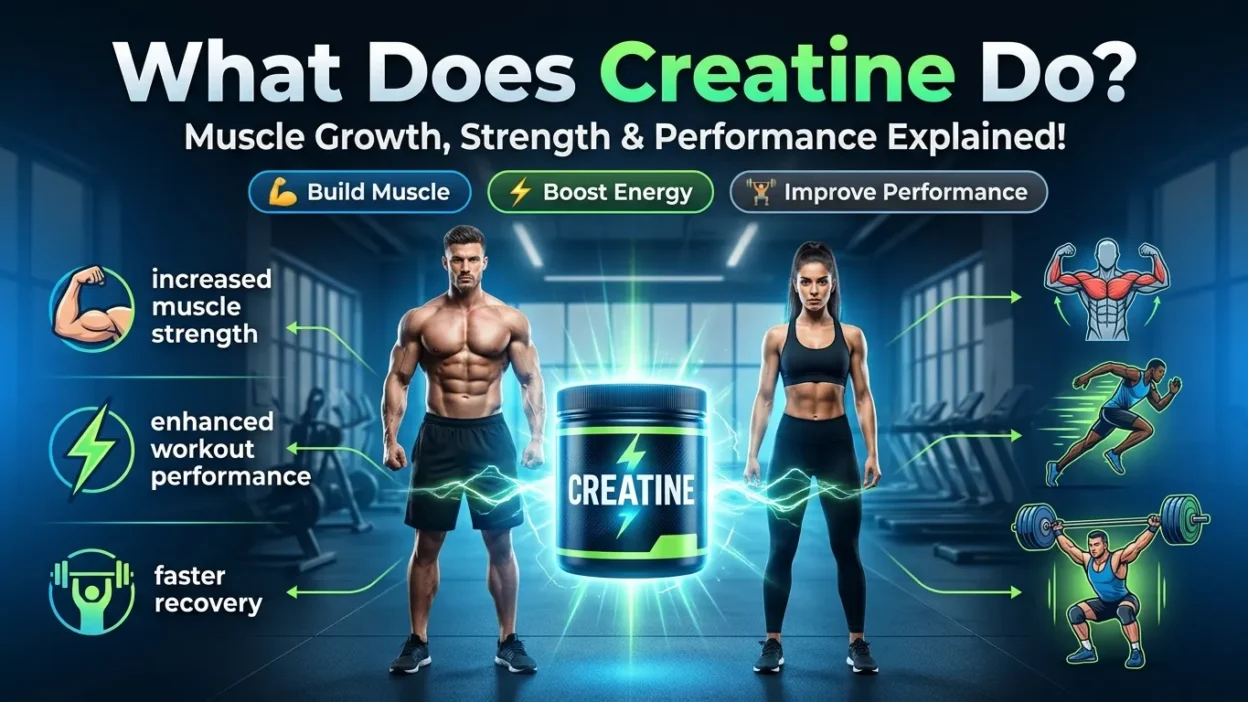
What does creatine do? Creatine helps your muscles produce quick energy during high-intensity exercise, allowing you to train harder, improve strength, support muscle growth, and boost overall exercise performance.
What Is Creatine?
Before understanding what does creatine do, it’s helpful to know what is creatine.
Creatine is a natural substance made from three amino acids: arginine, glycine, and methionine. Your liver, kidneys, and pancreas produce small amounts every day. About 95% of your body’s creatine is stored in skeletal muscle, where it helps create energy for movement.
You also get creatine naturally from foods such as:
- Beef
- Pork
- Salmon
- Tuna
- Herring
Because food contains only small amounts, many people choose creatine monohydrate, the most researched and widely recommended form. It is often considered the best creatine supplement because it is affordable, effective, and supported by decades of scientific research.
So, what is creatine used for?
Its main purpose is to help your muscles produce energy quickly during activities like:
- Weightlifting
- Sprinting
- Football
- Basketball
- CrossFit
- HIIT workouts
- Other forms of explosive or anaerobic exercise
Unlike steroids, creatine is a dietary supplement that naturally occurs in your body and certain foods.
Example:
“I’ve started taking creatine because I want more energy during my workouts.”
Key Takeaway: Creatine is a natural compound that helps your muscles create energy quickly, making short, intense workouts more effective.
What Does Creatine Do in Simple Words?
If someone asked you to explain what does creatine do in one sentence, here’s the easiest answer:
Imagine your muscles have a small rechargeable battery.
Every time you lift a heavy weight or sprint, that battery loses power. Creatine quickly recharges it so your muscles can keep working for a little longer.
That extra energy may only last a few more seconds, but those seconds can help you:
- Finish another repetition
- Lift slightly heavier weights
- Sprint faster
- Jump higher
- Train with better quality
Over weeks and months, those small improvements can add up to better strength and muscle growth.
How Does Creatine Work?
Many beginners ask how does creatine work after learning what it is.
Your muscles use a molecule called ATP (adenosine triphosphate) as their main source of energy. This process is known as ATP energy production.
The problem is that ATP runs out very quickly during intense exercise.
Creatine helps solve this problem.
Inside your muscles, creatine is stored as phosphocreatine. When ATP levels drop, phosphocreatine donates a phosphate group to help rebuild ATP almost instantly.
This process is called the phosphagen energy system, and it provides quick energy during explosive movements.
Because of this, creatine is especially effective for:
- Heavy lifting
- Sprinting
- Jumping
- Powerlifting
- Olympic lifting
- Football
- Rugby
- Volleyball
- Short cycling races
If you’ve wondered, does creatine increase energy during exercise, the answer is yes—but mainly during short bursts of intense activity rather than long-distance endurance sports.
What Does Creatine Do for Your Body?
Now let’s answer what does creatine do for your body in more detail.
Creatine supports several important functions that improve physical performance.
It may help:
- Increase quick energy production
- Improve sports performance
- Boost athletic performance
- Increase power output
- Reduce muscle fatigue
- Improve training volume
- Support lean muscle gains
- Help muscles recover between sets
These benefits explain why creatine is one of the world’s most popular sports nutrition supplements.
Rather than building muscle directly, creatine helps you train at a higher level. Better workouts often lead to better results.
Creatine Benefits
There are many proven creatine benefits, especially for people who perform resistance or high-intensity exercise.
1. Improves Strength
One of the biggest reasons people use creatine for strength is its ability to improve power during workouts.
Research shows that creatine can help people perform extra repetitions and lift heavier weights over time.
If you’re asking, can creatine help with strength training, the answer is yes. It is considered one of the most effective strength training supplements available.
2. Supports Muscle Growth
A common question is, does creatine build muscle?
Not by itself.
Creatine doesn’t magically increase muscle size overnight. Instead, it helps improve workout quality, allowing you to train harder and more consistently.
Over time, this supports creatine for muscle growth by increasing your training capacity.
Many beginners also ask, does creatine help build muscle faster.
It can help you make faster progress because better workouts often lead to better muscle-building results when combined with:
- Progressive overload
- Enough protein
- Quality sleep
- Consistent exercise
3. Improves Exercise Performance
Another reason people take creatine is improved exercise performance.
Whether you’re lifting weights or playing sports, creatine can help you perform repeated high-intensity efforts with less fatigue.
This is why many athletes include creatine in their training routines.
4. Helps Reduce Muscle Fatigue
Hard workouts leave muscles tired.
Because creatine helps restore energy between sets, it may reduce muscle fatigue, allowing you to maintain higher workout quality from beginning to end.
5. Supports Muscle Recovery
Some evidence suggests creatine may work as a muscle recovery supplement by reducing muscle damage after difficult training sessions.
While recovery still depends on sleep and nutrition, creatine may help you bounce back faster.
6. May Support Brain Function
Although creatine is best known for muscle health, researchers are also studying its possible role in cognitive performance.
Some early studies suggest it may support memory and mental performance during periods of fatigue, although more research is needed before strong conclusions can be made.
Why Do Athletes and Gym-Goers Use Creatine?
There are several reasons why creatine remains one of the most trusted workout supplements.
People use it because they want to:
- Lift heavier
- Build strength
- Increase lean muscle mass
- Improve sports performance
- Recover between sets
- Increase explosive power
- Train harder
- Improve gym performance
These benefits explain why creatine is popular among everyone from beginners to professional athletes.
Food Sources of Creatine
Even if you don’t take supplements, your diet already contains some creatine.
Natural food sources include:
| Food | Creatine Content |
| Beef | High |
| Pork | High |
| Herring | Very High |
| Salmon | Moderate |
| Tuna | Moderate |
| Cod | Moderate |
Vegetarians and vegans often have lower creatine stores because they eat little or no meat or fish. This is one reason some choose a creatine supplement.
Who Should Consider Taking Creatine?
You don’t need to be a bodybuilder to benefit from creatine.
Many people who use it include:
- Beginners starting strength training
- Experienced lifters
- Football players
- Sprinters
- CrossFit athletes
- Recreational gym members
- Older adults working to maintain muscle strength
If you’re wondering should beginners take creatine, many healthy beginners can benefit from it when combined with proper training and nutrition.
Another common question is is creatine worth taking for beginners.
If your goal is to improve strength, support muscle growth, and get more from your workouts, the answer is often yes.
Is Creatine Safe?
After learning what does creatine do, the next question most people ask is is creatine safe.
For most healthy adults, the answer is yes. Creatine monohydrate is one of the most researched sports nutrition supplements in the world. Hundreds of scientific studies have found it to be safe and effective when used as directed.
That said, no supplement is right for everyone. If you have kidney disease, liver disease, are pregnant or breastfeeding, or have another medical condition, talk to your healthcare provider before starting creatine.
Important: Creatine works best as part of a healthy lifestyle that includes regular exercise, balanced nutrition, enough sleep, and proper hydration. It is not a shortcut to fitness.
Who Should Avoid Creatine?
Although creatine is safe for many people, some individuals should get medical advice before using it.
You should speak with a healthcare professional if you:
- Have kidney disease
- Have severe liver disease
- Take medications that affect kidney function
- Are pregnant or breastfeeding
- Have any medical condition requiring regular medical supervision
If you’re healthy and exercise regularly, creatine is generally considered a safe supplement when taken as recommended.
Creatine Side Effects
Like any dietary supplement, there can be creatine side effects, but most are mild and temporary.
Possible side effects include:
- Mild stomach discomfort
- Temporary bloating
- Water retention inside muscles
- A small increase in body weight
Many people worry about does creatine cause weight gain.
The answer is yes—but usually not in the way people think.
Most early weight gain comes from creatine water retention, where extra water is stored inside muscle cells, not as body fat. This can actually make muscles appear fuller.
Current research does not show that creatine increases body fat.
Why Hydration Matters
A common myth is that creatine causes dehydration.
Research has not shown this to be true for healthy adults, but staying hydrated is still important because your muscles store more water while using creatine.
Simple hydration tips include:
- Drink water throughout the day.
- Increase fluids during hot weather.
- Stay hydrated during long workouts.
- Don’t wait until you feel thirsty.
Good hydration supports both performance and recovery.
How to Take Creatine
If you’re wondering how to take creatine, the good news is that it’s very simple.
The most recommended form is creatine monohydrate because it has the strongest scientific support.
Creatine Dosage
A typical creatine dosage is:
- 3–5 grams per day
Taking it every day is more important than taking large amounts occasionally.
Creatine Loading Phase
You may have heard about a creatine loading phase.
This usually means taking a higher amount for about 5–7 days before switching to a daily maintenance dose.
Here’s a quick comparison:
| Method | How It Works | Best For |
| Loading Phase | Fills muscle creatine stores quickly | People who want faster results |
| Daily Dose Only | Builds creatine stores gradually | Most beginners and casual gym-goers |
Both methods can be effective. Loading simply helps you notice results sooner.
Creatine Before or After Workout
Another common question is whether to take creatine before or after workout sessions.
Current research suggests that consistency matters more than timing.
Some people prefer taking creatine:
- Before training
- After training with a meal
- At the same time every day
The most important habit is taking it regularly.
How Long Does Creatine Take to Work?
One of the biggest beginner questions is how long does creatine take to work.
Here’s what many people experience:
| Timeline | What You May Notice |
| Week 1 | Slight increase in muscle water and fullness (especially with loading). |
| Weeks 2–4 | Better gym performance and more energy during intense workouts. |
| Months 2–3 | Noticeable improvements in strength, training volume, and muscle growth when combined with consistent exercise. |
Remember that results vary based on your workout routine, nutrition, sleep, and consistency.
Common Myths About Creatine
Let’s clear up a few common misunderstandings.
Myth: Creatine Is a Steroid
Fact: Creatine is not a steroid. It is a natural compound found in your body and in foods like meat and fish.
Myth: Creatine Builds Muscle Without Exercise
Fact: If you’re asking does creatine build muscle, the answer is that it supports muscle growth by helping you train harder. You still need resistance training and proper nutrition.
Myth: Creatine Is Only for Bodybuilders
Fact: Creatine can benefit many people, including athletes, beginners, older adults, and recreational exercisers.
Myth: You Must Cycle Creatine
Fact: Current research does not show that healthy adults need to cycle on and off creatine.
Pros and Cons of Creatine
| Pros | Cons |
| Improves strength | Mild bloating for some users |
| Supports muscle growth | Temporary water retention |
| Boosts exercise performance | May cause mild stomach discomfort in some people |
| Helps increase power output | Not necessary for everyone |
| Well researched | Should be discussed with a doctor if you have certain medical conditions |
Creatine vs Protein
Many beginners compare creatine vs protein, but they have different jobs.
| Supplement | Main Purpose | Best For |
| Creatine Monohydrate | Improves quick energy, power, and performance | Strength training and high-intensity exercise |
| Protein Powder | Repairs and builds muscle tissue | Meeting daily protein needs |
Many people use both because they support different parts of the muscle-building process.
FAQs
What does creatine do for women?
What does creatine do for women? It helps improve strength, supports exercise performance, and may help build lean muscle when combined with regular training. Women can benefit from creatine just as men can.
What does creatine do for men?
What does creatine do for men? It helps muscles produce quick energy, making it easier to lift heavier weights, improve athletic performance, and recover between intense workouts.
Is creatine safe to take every day?
Yes. Healthy adults can generally take creatine every day when following the recommended serving size.
Should beginners take creatine?
Many experts recommend creatine for beginners who want to improve strength and workout performance, as long as they follow proper dosage guidelines.
Does creatine help build muscle faster?
Yes, it can. Does creatine help build muscle faster? It may help you make faster progress because it allows you to train harder and complete more quality workouts.
Does creatine increase energy during exercise?
Yes. Creatine supports ATP energy production, helping your muscles produce quick energy during short, explosive activities like lifting weights and sprinting.
Is creatine worth taking for beginners?
If your goal is to improve strength, increase training volume, and support muscle growth, many beginners find creatine to be one of the most valuable and affordable supplements available.
What are the benefits of creatine monohydrate?
The benefits of creatine monohydrate include improved strength, better exercise performance, increased power output, support for muscle growth, and decades of scientific research confirming its effectiveness and safety.
Final Thought
If you’ve been asking what does creatine do, the answer is now much clearer. Creatine helps your muscles produce quick energy through the phosphagen energy system, improving exercise performance, increasing power output, supporting creatine for strength, and helping with creatine for muscle growth when combined with consistent training, good nutrition, and enough rest.
It isn’t a magic solution, but it is one of the most trusted and well-researched fitness supplements available today. Understanding how does creatine work and using it correctly can help you make informed decisions about your fitness journey and get the most from every workout.

Cole Jaxson is the administrator of SymbolPeak, overseeing site management and content integrity. He is dedicated to presenting Bible-based spiritual symbol meanings with accuracy, reverence, and clarity, ensuring the platform remains trustworthy, well-organized, and aligned with biblical teachings and faith-centered understanding for readers worldwide.