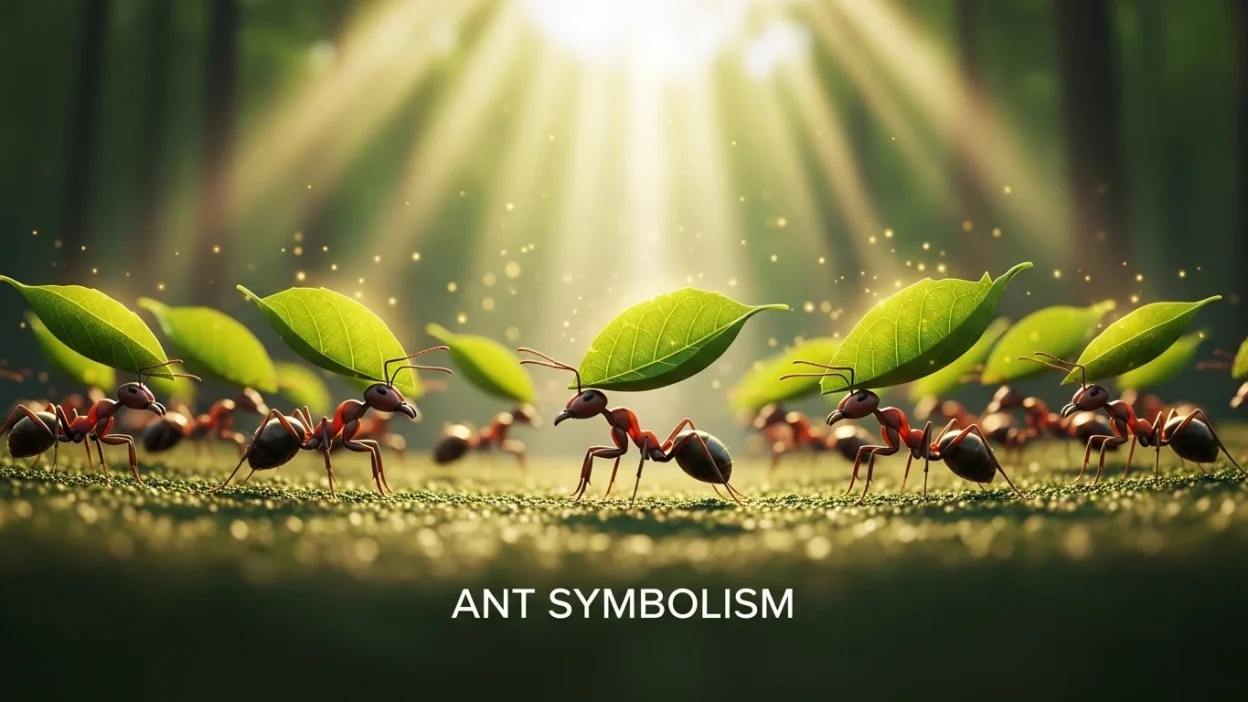
Ant symbolism carries deep meaning across cultures, spirituality, and everyday life.
These tiny creatures may seem insignificant, but their behavior reveals powerful lessons about discipline, cooperation, and resilience.
If you’re curious about their spiritual message or saw ants in a dream, understanding ant symbolism can offer valuable insight into your own journey.
Ant Symbolism Meaning (Clear Definition)
Ant symbolism represents hard work, teamwork, patience, and determination. Ants are known for their ability to carry heavy loads, work in organized colonies, and never give up making them powerful symbols of persistence and unity.
In simple terms, ants remind us that small, consistent efforts can lead to big achievements.
What Does Ant Symbolism Represent?
Ant symbolism reflects several core values that are essential for personal and collective success:
- Hard Work – Ants are constantly active and productive
- Teamwork – They function as a highly organized community
- Discipline – Every ant has a role and follows it strictly
- Patience – They build and gather slowly over time
- Strength – Despite their size, they carry many times their weight
- Preparation – Ants store food for future survival
These qualities make ants a symbol of dedication and long-term success.
Spiritual Meaning of Ant Symbolism
Spiritually, ants are often seen as messengers of persistence and purpose. When ants appear frequently in your life, it may be a sign to:
- Stay focused on your goals
- Trust the process of gradual progress
- Work harmoniously with others
- Remain disciplined even during challenges
Ants also symbolize grounded energy, encouraging you to stay connected to reality while pursuing your ambitions.
Biblical / Religious Meaning of Ant Symbolism
In the Bible, ants are used as an example of wisdom and diligence.
In Proverbs 6:6, ants are praised for their work ethic and foresight:
“Go to the ant, you sluggard; consider its ways and be wise.”
This highlights key spiritual lessons:
- Self-motivation without supervision
- Planning for the future
- Avoiding laziness
In many religious interpretations, ants represent humility and responsibility.
Ant Symbolism in History and Culture
Throughout history, ants have been admired for their social structure and efficiency.
- In ancient cultures, ants symbolized cooperation and survival
- In Native traditions, ants represented patience and community strength
- In Asian cultures, they are often seen as symbols of loyalty and unity
Their organized colonies inspired early human societies to value collaboration and structure.
Ant Symbolism in Literature and Art
Ants frequently appear in stories and artwork as symbols of diligence and moral lessons.
One famous example is “The Ant and the Grasshopper”, where ants represent hard work and preparation, while the grasshopper symbolizes laziness.
In art, ants are often used to:
- Represent collective effort
- Highlight the power of small actions
- Show the beauty of structured systems
They serve as reminders that even the smallest beings can have great impact.
Dream Meaning of Ant Symbolism
Dreaming of ants can carry different meanings depending on the context:
- Seeing ants working – Progress and productivity in your life
- Ants crawling on you – Feeling overwhelmed or stressed
- Large number of ants – Social pressure or teamwork situations
- Killing ants – Disruption in routine or resistance to discipline
Overall, ant dreams often reflect your relationship with work, responsibility, and cooperation.
Modern Meaning of Ant Symbolism
In today’s world, ant symbolism is more relevant than ever.
It represents:
- Work ethic in careers
- Team collaboration in organizations
- Consistency in personal growth
- Building success step by step
Ants remind us that success isn’t about speed it’s about steady effort and persistence.
Symbolic Meanings of Ants (Quick Overview)
| Symbolism Aspect | Meaning |
| Hard Work | Constant effort and productivity |
| Teamwork | Cooperation and unity |
| Patience | Slow and steady progress |
| Strength | Power beyond physical size |
| Discipline | Structured and focused behavior |
| Preparation | Planning for the future |
FAQs
What does ant symbolism mean spiritually?
Ant symbolism spiritually represents patience, persistence, and working toward goals with discipline and purpose.
Are ants a sign of good luck?
Yes, ants are often seen as a positive sign of productivity, teamwork, and future success through consistent effort.
What does it mean if ants appear in your house?
It may symbolize the need for organization, discipline, or attention to small details in your life.
What do ants represent in dreams?
Ants in dreams usually reflect work habits, stress levels, or your role within a group or community.
Why are ants considered powerful symbols?
Despite their small size, ants demonstrate strength, unity, and determination making them symbols of resilience and success.
Conclusion
Ant symbolism teaches one of life’s most powerful lessons: success comes from persistence, discipline, and teamwork.
These tiny creatures remind us that even the smallest efforts, when done consistently, can create something extraordinary.