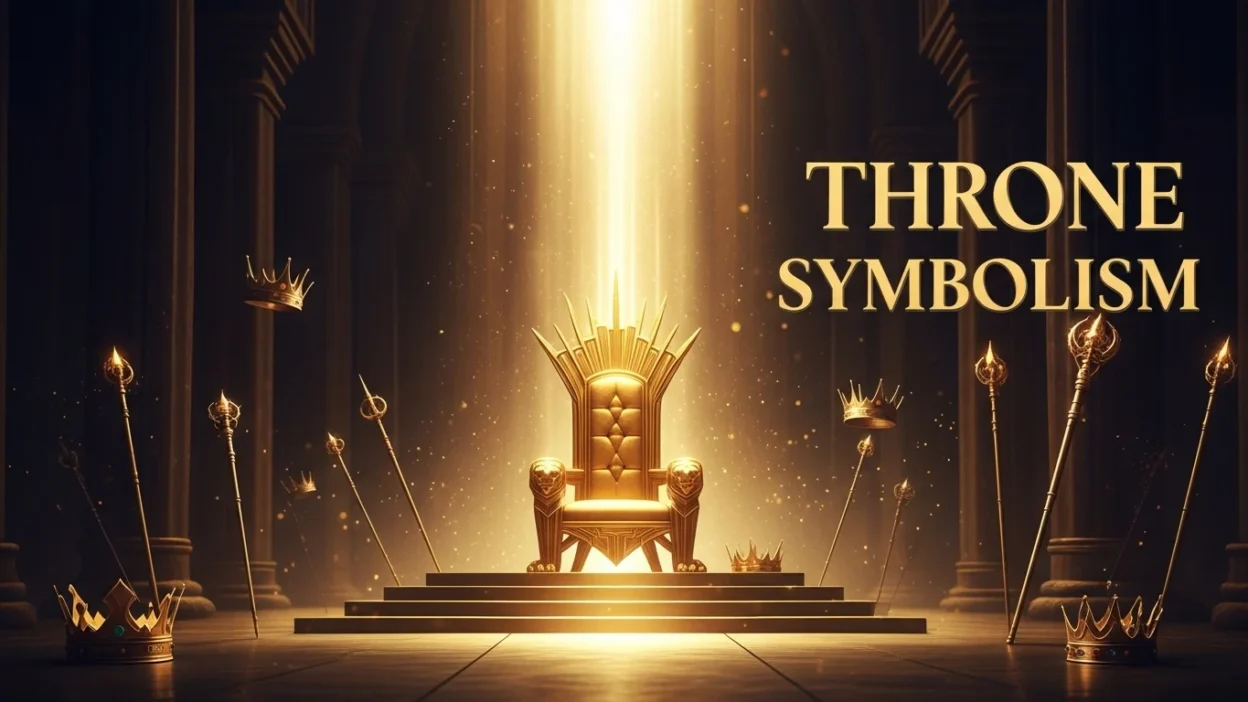
Throne symbolism carries deep and timeless meaning across cultures, religions, and human imagination.
A throne is not just a chair it represents power, authority, legitimacy, and often a connection to something higher than ordinary life.
If seen in ancient kingdoms, spiritual traditions, or modern storytelling, the throne remains a powerful symbol of leadership, control, and responsibility.
Throne Symbolism Meaning (Clear Definition)
Throne symbolism refers to the representation of ultimate authority, leadership, and sovereignty. It often signifies a position of power that is both earned and inherited.
At its core, a throne symbolizes:
- Control over a domain (kingdom, people, or idea)
- Responsibility tied to leadership
- Legitimacy and rightful rule
What Does Throne Symbolism Represent?
A throne represents more than physical power it reflects deeper psychological and social meanings.
Key Representations of Throne Symbolism:
- Authority and Leadership – The seat of a ruler or decision-maker
- Power and Control – Command over people, territory, or influence
- Divine Right – A connection between rulers and higher powers
- Responsibility – The burden that comes with leadership
- Status and Prestige – Elevated social or political standing
Summary Table of Throne Symbolism
| Symbolic Aspect | Meaning |
| Authority | Control and leadership over others |
| Power | Ability to influence and command |
| Divine Connection | Link between ruler and spiritual forces |
| Responsibility | Duty to govern wisely |
| Prestige | Honor, respect, and elevated status |
Spiritual Meaning of Throne Symbolism
Spiritually, a throne often represents inner authority and self-mastery. It reflects the idea of “sitting in your power” and taking control of your life path.
In many interpretations, throne symbolism connects to:
- Awakening personal power
- Aligning with higher purpose
- Achieving balance between ego and wisdom
A spiritual throne is not about dominance over others but mastery over oneself.
Biblical / Religious Meaning of Throne Symbolism
In religious contexts, throne symbolism is deeply connected to divine authority and sacred rule.
- In Christianity, the throne often represents God’s ultimate authority and judgment
- It appears in visions of heaven as a symbol of divine presence
- Angels, saints, and rulers are sometimes depicted near or around the throne, emphasizing hierarchy
Across religions, the throne signifies:
- Sacred power
- Justice and judgment
- Eternal rule
Throne Symbolism in History and Culture
Throughout history, thrones have been central to kingship and governance.
- Ancient civilizations used elaborate thrones to display power and legitimacy
- Monarchs were crowned and seated on thrones to mark their authority
- The throne became a visual symbol of ruling power across empires
In many cultures:
- Losing the throne meant losing power
- Claiming the throne symbolized victory or rightful inheritance
The phrase “taking the throne” still represents gaining control or leadership today.
Throne Symbolism in Literature and Art
In literature and art, the throne is a powerful storytelling device.
It often symbolizes:
- The struggle for power
- Moral responsibility of leadership
- Corruption versus rightful rule
Characters who seek the throne may represent ambition, while those who sit on it reflect the consequences of power.
Artists also use throne imagery to depict:
- Divine figures
- Royal authority
- Psychological dominance
Dream Meaning of Throne Symbolism
Seeing a throne in a dream can carry strong personal meaning.
Common Interpretations:
- Sitting on a throne – Confidence, success, or desire for control
- Empty throne – Opportunity or uncertainty about leadership
- Falling from a throne – Fear of losing power or status
- Seeing someone else on a throne – Comparison, envy, or respect
Dreams about thrones often relate to self-worth, ambition, and personal authority.
Modern Meaning of Throne Symbolism
Today, throne symbolism extends beyond royalty into everyday life.
Modern interpretations include:
- Leadership in business or career
- Personal empowerment and confidence
- Social influence and recognition
In popular culture, the throne still represents:
- Competition for power
- Strategic thinking
- The balance between ambition and responsibility
Even without kingdoms, people still “build their own thrones” through success and influence.
FAQs
What does throne symbolism mean in simple terms?
Throne symbolism represents power, authority, and leadership, often tied to responsibility and rightful control.
Is throne symbolism always about kings and queens?
No, it also reflects personal power, leadership in everyday life, and spiritual authority.
What does a throne symbolize spiritually?
Spiritually, it represents self-mastery, inner strength, and alignment with higher purpose.
What does dreaming of a throne mean?
It often relates to ambition, confidence, or concerns about control and status in your life.
Why is the throne associated with power?
Because historically, rulers governed from thrones, making it a universal symbol of authority and control.
Conclusion
Throne symbolism goes far beyond a royal seat it represents the essence of power, responsibility, and self-mastery.
If viewed through history, spirituality, or personal growth, the throne reminds us that true authority comes not just from position, but from wisdom and balance.