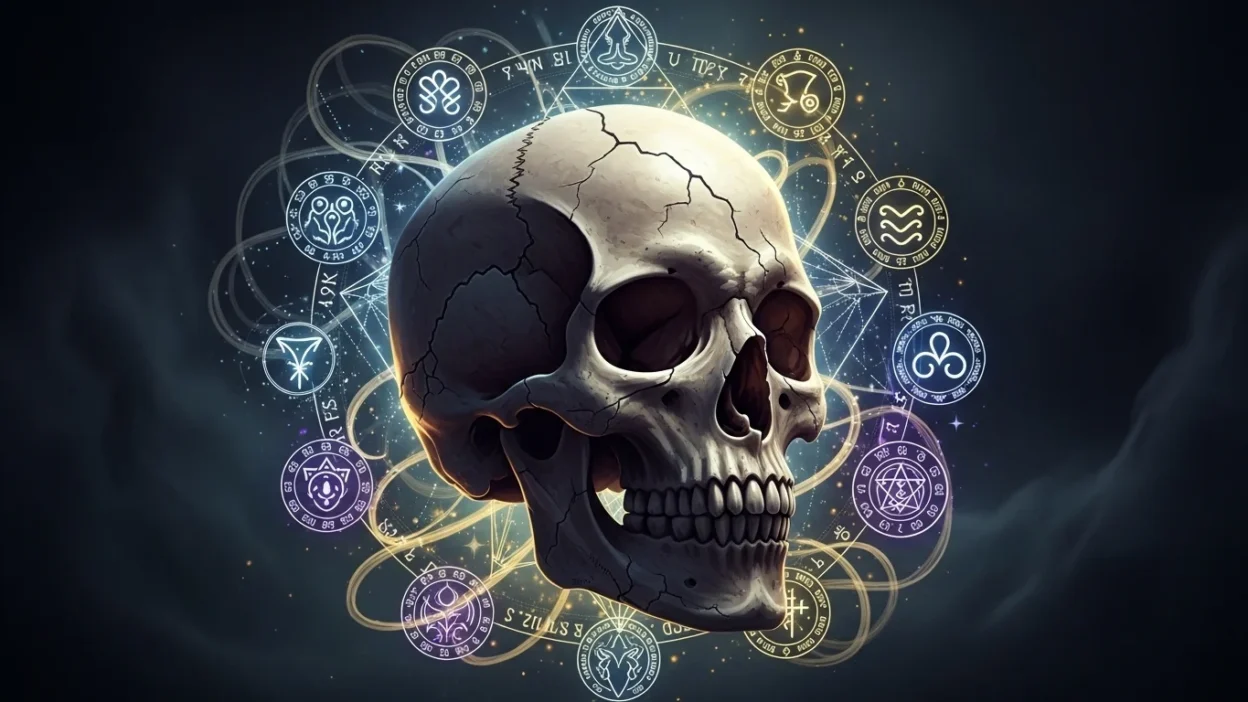
Skull symbolism has fascinated humanity for centuries, representing far more than just death.
Across cultures and belief systems, the skull carries deep meanings tied to transformation, protection, and the mysteries of life itself.
If seen in art, dreams, or spiritual practices, it invites us to reflect on life’s temporary nature and hidden truths.
Skull Symbolism Meaning (Clear Definition)
Skull symbolism refers to the representation of mortality, transformation, protection, and the cycle of life and death. It serves as a powerful reminder that life is finite, but also meaningful and constantly evolving.
At its core, the skull is not just about endings it also symbolizes new beginnings and inner strength.
What Does Skull Symbolism Represent?
The skull carries multiple layered meanings depending on context and culture. Common interpretations include:
- Mortality and impermanence – A reminder that life is temporary
- Transformation and rebirth – Death leading to new beginnings
- Protection and strength – Seen as a spiritual shield in some traditions
- Wisdom and knowledge – The skull as the seat of the mind
- Fearlessness – Acceptance of life’s ultimate reality
Quick Summary Table
| Symbol Aspect | Meaning |
| Death | End of physical life |
| Rebirth | Renewal and transformation |
| Protection | Spiritual defense |
| Wisdom | Knowledge and awareness |
| Power | Strength and fearlessness |
Spiritual Meaning of Skull Symbolism
Spiritually, skull symbolism is deeply connected to transformation and awakening. It represents shedding the old self and embracing a higher level of consciousness.
Many spiritual traditions see the skull as:
- A symbol of ego death
- A sign of spiritual rebirth
- A reminder to focus on inner truth rather than outer appearance
Rather than being negative, it often encourages growth, awareness, and acceptance of life’s cycles.
Biblical / Religious Meaning of Skull Symbolism
In religious contexts, the skull holds significant meaning.
In Christianity, the skull is often associated with:
- Human mortality – “Dust to dust” concept
- Repentance and humility
- The location of Golgotha (Place of the Skull), where Jesus was crucified
In other traditions:
- Hinduism: Skulls are linked to destruction and renewal through divine power
- Buddhism: Symbolize impermanence and detachment from material life
Overall, the skull is a reminder of spiritual truth and the temporary nature of the physical world.
Skull Symbolism in History and Culture
Throughout history, skull symbolism has appeared in many cultures:
- Ancient civilizations used skulls in rituals to honor ancestors
- In Mexican culture, skulls (like sugar skulls) celebrate life during Día de los Muertos
- Pirate imagery used skulls to symbolize danger and fearlessness
- Medieval Europe used skulls in art to remind people of mortality (memento mori)
These diverse uses show that the skull is not just about death it’s about how we understand life.
Skull Symbolism in Literature and Art
In literature and art, the skull is a powerful visual and thematic symbol.
- In classic works, it represents existential reflection and life’s fragility
- Artists use skulls to explore beauty in decay
- In modern art, it often symbolizes rebellion, identity, and deeper truth
The skull forces viewers to confront reality while also inspiring philosophical thought.
Dream Meaning of Skull Symbolism
Seeing a skull in dreams can carry important messages.
Common interpretations include:
- Personal transformation – You are changing internally
- Facing fears – Confronting something you’ve avoided
- Letting go – Releasing past habits or emotions
- Awareness of mortality – A reminder to value life
The emotional tone of the dream matters fearful dreams may signal anxiety, while calm ones suggest acceptance.
Modern Meaning of Skull Symbolism
Today, skull symbolism is widely used in fashion, tattoos, and design.
Modern meanings often include:
- Individuality and rebellion
- Strength and resilience
- Acceptance of death as part of life
- Edgy or bold identity expression
Rather than being purely dark, the skull has become a symbol of empowerment and authenticity.
FAQs
What does skull symbolism mean spiritually?
It represents transformation, inner awakening, and the shedding of the ego to reach higher consciousness.
Is skull symbolism always negative?
No, it often symbolizes rebirth, strength, and personal growth rather than just death.
What does a skull mean in dreams?
It usually indicates transformation, facing fears, or letting go of something in your life.
Why are skulls used in art and culture?
They express themes of mortality, truth, and the deeper meaning of life.
What does wearing skull symbols represent?
It often shows individuality, fearlessness, and acceptance of life’s impermanence.
Conclusion
Skull symbolism is far richer than it first appears. While it reminds us of mortality, it also speaks of transformation, strength, and deeper awareness.
By understanding its meaning, we can see it not as something to fear but as a powerful symbol of life’s true nature.