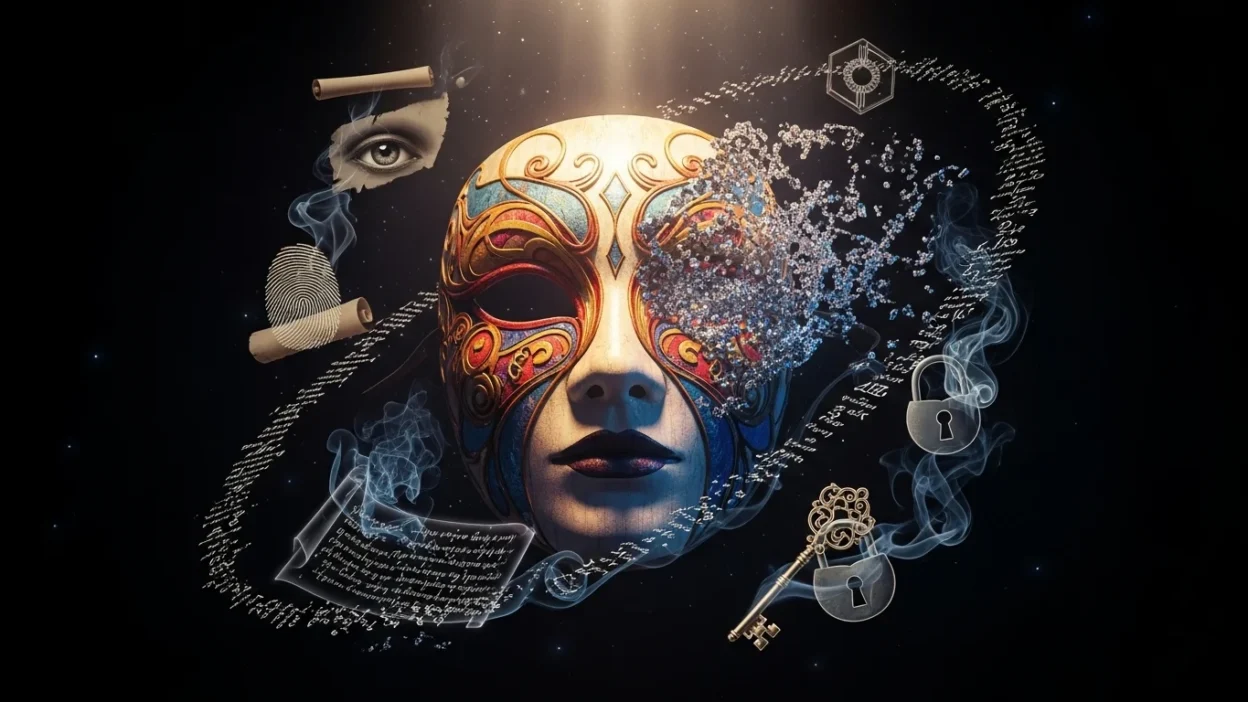
Masks have fascinated humanity for centuries, not just as physical objects but as powerful symbols.
Mask symbolism touches on identity, transformation, and hidden truths, reflecting both personal and cultural dimensions.
Exploring this symbolism can reveal insights into psychology, spirituality, history, and art, helping us understand why masks continue to captivate us today.
Mask Symbolism Meaning (Clear Definition)
Mask symbolism refers to the deeper meanings and interpretations associated with masks beyond their physical appearance. Masks often represent concealment, transformation, or a shift in identity, serving as metaphors for how people present themselves or hide certain aspects of their personalities.
What Does Mask Symbolism Represent?
Masks can represent many concepts depending on context:
- Identity and Persona: Showing a different side of oneself.
- Secrecy and Mystery: Concealing emotions or intentions.
- Transformation: Signifying personal or spiritual change.
- Protection: Both physical and psychological shield.
- Cultural Expression: Symbolizing traditions and rituals.
Spiritual Meaning of Mask Symbolism
In spiritual contexts, masks often symbolize the soul’s journey:
- Inner Truth: Masks may encourage reflection on hidden desires or fears.
- Ritual Connection: Used in ceremonies to connect with deities or ancestors.
- Transformation: Represent spiritual growth or rebirth.
Spiritual mask symbolism reminds us that appearances can be deceptive, urging mindfulness and self-awareness.
Biblical / Religious Meaning of Mask Symbolism
While masks are not heavily emphasized in biblical texts, religious traditions worldwide often use masks in rituals:
- Christian Allegory: Masks may symbolize false appearances or the need for inner purity.
- Other Religions: Masks in Hindu, African, and Indigenous practices connect humans with gods, spirits, or ancestors.
Mask Symbolism in History and Culture
Masks have played significant roles in human history:
| Culture/Period | Mask Symbolism |
| Ancient Egypt | Funerary masks representing the afterlife |
| Greek Theatre | Expressed emotions and archetypes on stage |
| African crews | Spiritual and ritualistic purposes |
| Venetian Carnival | Social freedom and hidden identity |
| Japanese Noh Theatre | Transformation of characters and emotions |
Masks often bridge the human and spiritual worlds, reflecting societal values and beliefs.
Mask Symbolism in Literature and Art
In literature and art, masks serve as metaphors for hidden intentions, duality, and self-exploration:
- Literature: Characters wearing masks often reveal secrets, dual identities, or moral conflicts.
- Art: Masks symbolize creativity, mystery, or societal commentary.
- Theatre & Performance: Enhance storytelling and emotional expression.
Dream Meaning of Mask Symbolism
Dreaming of masks can reflect your subconscious:
- Wearing a Mask: Feeling you’re hiding your true self.
- Removing a Mask: Seeking authenticity and self-acceptance.
- Other People Wearing Masks: Observing hidden intentions in others.
Dream interpretations often encourage self-reflection and personal growth.
Modern Meaning of Mask Symbolism
Today, masks have evolved beyond tradition:
- Medical Masks: Protection and safety, especially during pandemics.
- Fashion & Identity: Personal expression and style.
- Psychological Symbol: Representing social roles or emotional barriers.
Modern mask symbolism highlights how physical objects retain metaphorical significance in contemporary life.
Summary Table of Mask Symbolism
| Symbolic Aspect | Meaning |
| Identity | Persona, social roles |
| Concealment | Secrets, mystery |
| Transformation | Personal growth, change |
| Spiritual Connection | Rituals, divine or ancestral links |
| Protection | Physical or emotional shield |
| Creativity & Expression | Art, literature, theatre |
FAQs
Q1: What is the main meaning of mask symbolism?
It represents identity, concealment, transformation, and the duality of human nature.
Q2: Are masks spiritually significant?
Yes, masks often symbolize inner truths, rituals, and connections to higher powers or ancestors.
Q3: Why do artists use masks in literature and art?
To express hidden emotions, explore dual identities, or convey cultural messages.
Q4: What does it mean to dream about masks?
Dreaming of masks can reveal hidden emotions, self-deception, or the desire for authenticity.
Conclusion
Mask symbolism reminds us that appearances can be both revealing and deceptive.
By exploring the meanings behind masks, we gain insights into identity, transformation, and the human experience, connecting the past with modern life in profound ways.