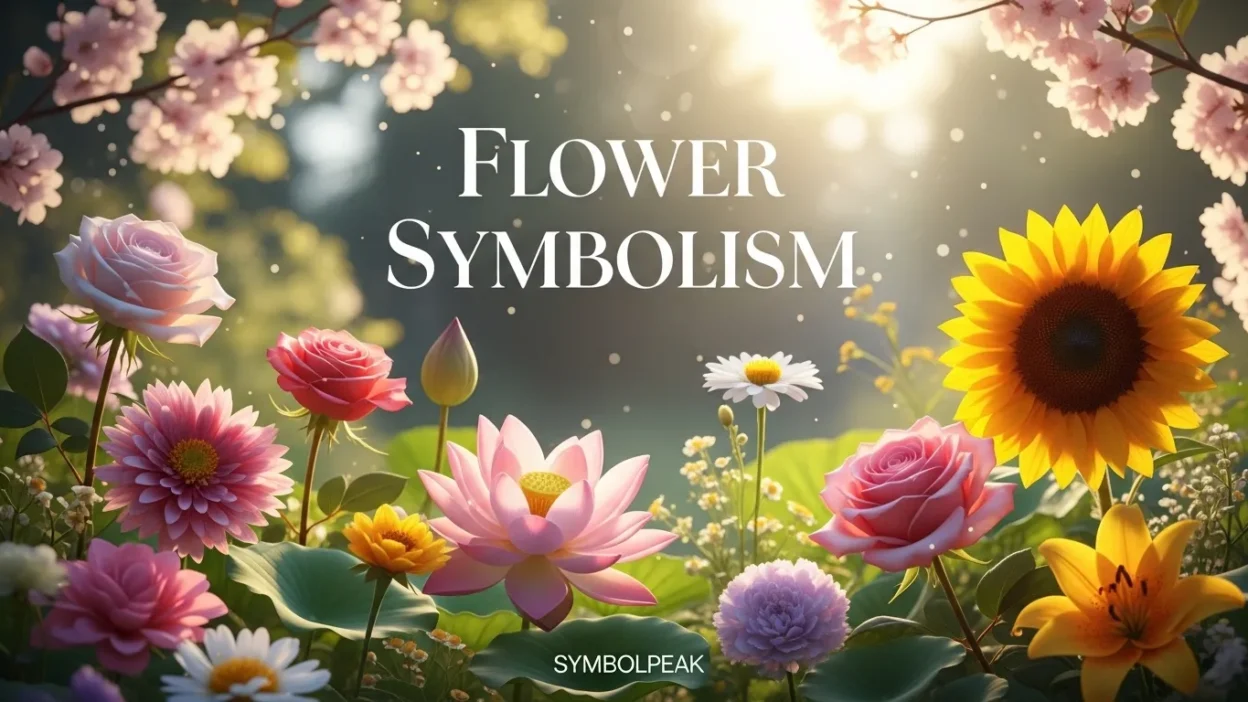
Flower symbolism has fascinated people for centuries. Across cultures and traditions, flowers have been used to express emotions, beliefs, and messages that words sometimes cannot capture.
From love and hope to purity and remembrance, flower symbolism reveals deeper meanings hidden within nature’s most beautiful creations.
Understanding these meanings helps people appreciate flowers not only for their beauty but also for the powerful messages they carry.
Flower Symbolism Meaning (Clear Definition)
Flower symbolism refers to the use of flowers to represent specific emotions, ideas, or spiritual meanings. Different flowers and even different colors of the same flower can symbolize various feelings such as love, friendship, peace, mourning, or growth.
This symbolic language of flowers has been used in art, religion, literature, and personal communication for centuries. For example, a red rose symbolizes deep love, while a white lily often represents purity and peace.
In simple terms, flower symbolism is the idea that flowers communicate deeper messages beyond their physical beauty.
What Does Flower Symbolism Represent?
Flowers are powerful symbols because they mirror human emotions and life experiences. Their growth, blooming, and fading often represent different stages of life.
Common meanings associated with flower symbolism include:
- Love and romance
- Beauty and elegance
- New beginnings
- Hope and healing
- Friendship and appreciation
- Remembrance and respect
Because flowers appear in celebrations, funerals, and spiritual rituals, they have become universal symbols of human emotion.
Common Flower Symbolism Meanings
| Flower | Symbolic Meaning |
| Rose | Love, passion, romance |
| Lily | Purity, peace, renewal |
| Lotus | Spiritual enlightenment, rebirth |
| Sunflower | Positivity, loyalty, happiness |
| Daisy | Innocence, joy, simplicity |
| Tulip | Perfect love, affection |
These meanings may vary slightly across cultures, but the emotional messages remain remarkably consistent worldwide.
Spiritual Meaning of Flower Symbolism
In spiritual traditions, flowers often represent transformation and the connection between nature and the soul. Because flowers grow from soil and bloom toward the light, they symbolize spiritual awakening and personal growth.
Some deeper spiritual meanings of flowers include:
- Spiritual enlightenment
- Divine beauty
- Inner peace
- Renewal of the soul
- Harmony with nature
The lotus flower, for example, is widely known for its spiritual symbolism because it grows in muddy water yet blossoms into a beautiful, pure flower. This represents rising above challenges and achieving spiritual clarity.
Biblical / Religious Meaning of Flower Symbolism
Flowers appear frequently in religious texts and spiritual traditions. In many belief systems, flowers represent divine beauty, purity, and the blessings of creation.
In biblical symbolism, flowers often reflect the temporary nature of life as well as the beauty of God’s creation. Lilies, in particular, symbolize purity, innocence, and faith.
Religious symbolism connected to flowers often includes:
- Purity and holiness
- Faith and devotion
- Resurrection and renewal
- God’s natural beauty
Because flowers bloom and fade, they also remind believers about the importance of humility and spiritual awareness.
Flower Symbolism in History and Culture
Throughout history, flowers have served as silent messengers. One of the most famous examples is the Victorian language of flowers, also known as floriography. During the Victorian era, people used flowers to send secret messages when expressing emotions openly was discouraged.
For example:
- A red rose symbolized passionate love
- A yellow rose symbolized friendship
- A white rose symbolized purity and respect
Many cultures also use flowers in important traditions. In Asian cultures, lotus flowers symbolize spiritual enlightenment, while in Western traditions roses dominate romantic symbolism.
Festivals, weddings, funerals, and ceremonies around the world continue to use flowers to communicate meaning and emotion.
Flower Symbolism in Literature and Art
Flowers have long inspired poets, writers, and artists. Their beauty and symbolism make them powerful storytelling elements.
In literature, flowers often represent themes such as love, innocence, transformation, or loss. Authors use them to create deeper emotional layers within stories.
In art and paintings, flowers symbolize:
- The fragility of life
- Beauty and perfection
- The passage of time
- Love and desire
From classical paintings to modern photography, floral imagery continues to communicate powerful symbolic ideas.
Dream Meaning of Flower Symbolism
Dreaming about flowers often reflects positive emotions and personal growth. In dream interpretation, flowers usually symbolize happiness, hope, and emotional healing.
Common dream meanings include:
- Blooming flowers – success or personal growth
- Receiving flowers – appreciation or love
- Wilted flowers – disappointment or lost opportunities
- Colorful flowers – joy and emotional balance
Dream symbolism can vary depending on the type, color, and condition of the flowers seen in the dream.
Modern Meaning of Flower Symbolism
Today, flower symbolism remains an important part of communication. People still give flowers to express emotions during special occasions.
In modern life, flowers are commonly used to symbolize:
- Romantic love (roses)
- Congratulations and celebration
- Sympathy and remembrance
- Friendship and appreciation
Social media, weddings, branding, and decorative design also frequently use flowers because their symbolism is instantly recognizable and emotionally powerful.
Flowers continue to connect people with nature, emotion, and tradition in a meaningful way.
FAQs
What is flower symbolism?
Flower symbolism is the practice of using flowers to represent emotions, ideas, or spiritual meanings beyond their physical beauty.
Why are flowers used as symbols?
Flowers symbolize emotions because their beauty, growth, and life cycle naturally reflect human experiences like love, hope, and renewal.
Which flower symbolizes love the most?
The rose, especially the red rose, is the most widely recognized symbol of love and romantic passion.
Do different flower colors have different meanings?
Yes. Flower colors often change the symbolism. For example, red represents love, white represents purity, and yellow symbolizes friendship.
What flower symbolizes new beginnings?
The lotus flower and the daffodil are commonly associated with new beginnings, renewal, and fresh starts.
Conclusion
Flower symbolism reveals how deeply humans connect with nature and emotion. Across cultures, flowers have become powerful symbols of love, spirituality, hope, and remembrance.
If in history, dreams, religion, or modern celebrations, flowers continue to communicate meaningful messages that transcend language.